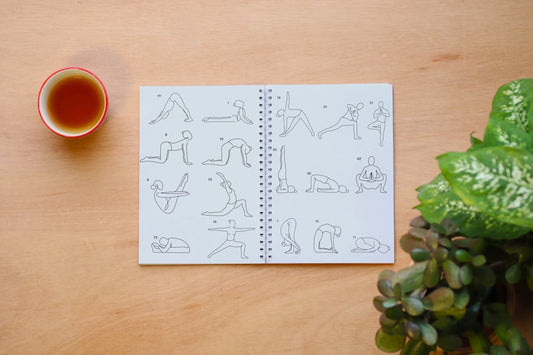
Morning Routine Against Pollen Allergies

A gentle, natural, breath-focused routine to help you make the most of spring.
Seasonal allergies, especially to pollen, can disrupt breathing, tire the body, and affect quality of life. To relieve them naturally, a targeted morning routine can ease symptoms and strengthen immunity. Here is a complete sequence combining nasal cleansing, yoga poses, and breathing techniques.
We always start with an essential practice: Jal Neti.
Jal Neti
Jal Neti is a sinus-cleansing technique from Ayurveda. It involves running warm salt water through the nostrils to remove pollen, dust, mucus, and other accumulated impurities. This practice should be done first, before any other activity or pose.
Start by preparing your saline solution: mix 1/4 to 1/2 teaspoon of non-iodized salt into 250 ml of warm sterile water (boiled and cooled water, or sterile water sold at the pharmacy). Use a neti pot specially designed for this purpose, available at the pharmacy.
Lean over your sink, tilt your head slightly to the side, and gently insert the spout of the pot into the upper nostril. Keep your mouth open and breathe calmly while the water flows naturally out the opposite nostril. Then repeat on the other side.
Once finished, lean forward with your head down to let any remaining water drain out. Exhale gently, without forcing. To clear the sinuses fully, you can then move into downward-facing dog and exhale through the nose.
Benefits:
- Removes allergens and impurities lodged in the sinuses
- Reduces congestion and inflammation
- Promotes clear, smooth breathing
Precautions:
Always use warm, sterile water, never cold or untreated tap water. Never do this practice alone the first time: it requires guidance from an experienced professional. Avoid Jal Neti in case of infection or nasal injury. Jal Neti is a gentle yet powerful method to incorporate regularly to support respiratory health, especially during pollen season.
Yoga can help calm inflammation, improve breathing, and reduce stress, which often worsens allergies.
Yoga poses to reduce pollen allergy symptoms:
Yoga can help calm inflammation, improve breathing, and reduce stress, which often worsens allergies.
1. Shoulder Stand (Sarvangasana)

Sarvangasana is the Sanskrit word for Shoulder Stand, where sarva means "all" and anga means "limb": a pose that benefits the entire body.
Technique: Lie on your back, legs lifted vertically. Support your lower back with your hands, resting on your shoulders and elbows. Keep the body aligned and stable.
Benefits:
- Improves blood circulation and digestion
- Calms the nervous system and reduces stress
- Promotes sleep and mental clarity
- Decongests the sinuses and improves breathing.
2. Child's Pose (Balasana)
Balasana, or child's pose, is a pose of comfort, relaxation, and grounding found in every yoga practice. Depending on its variations, it can also help stimulate digestion.
Technique: Kneel down, with your seat resting on your heels and your knees spread hip-width apart. Take a deep breath in and slide your hands forward. Gently let your back lengthen as you sit back onto your heels, with your belly resting against your thighs. Your front body should touch the floor. To deepen the posture, extend the arms far forward, fingers on the floor in an inverted cup, elbows lifted.
Benefits:
- Promotes and stimulates digestion
- Fights stress and fatigue
- Calms brain activity
- Eases facial tension and promotes freer breathing.
3. Cobra Pose (Bhujangasana)

To strengthen without strain: a gentle extension that activates the back muscles.
Technique: lying on your stomach, chin on the floor, hands under the shoulders, inhale and gently lift the upper chest using the strength of the back. The arms support but don't push, like the cobra, which has neither arms nor hands.
Benefits:
- Stretches the spine without compressing it
- Stimulates the digestive organs
- Reduces stress
- Opens the rib cage.
- Eases breathing and tones the lungs.
4. Fish Pose (Matsyasana)

To open, release, and breathe better: an expansive pose that eases the airways.
Technique: lying on your back, legs extended, slide your hands under your seat or rest them along your body. On an inhale, gently press into your elbows to lift the chest and arch the upper back. The head rests gently on the floor or stays slightly lifted, throat open. Breathe deeply into the rib cage.
Benefits:
- Opens the lungs and improves breathing capacity
- Decongests the sinuses by promoting better circulation
- Stimulates the thymus and supports immunity
- Soothes the nervous system and reduces allergy-related fatigue
Keep in mind
Consistency is the key to feeling the benefits. Listen to your body and avoid poses that might worsen your symptoms. For a safe, tailored practice, don't hesitate to work with an experienced yoga teacher.
Yoga, practiced with care, can become a true ally in easing allergies and strengthening your overall balance.
To finish, 2 Pranayamas
Pranayama, the art of breath, is a powerful practice for calming the body and clarifying the mind. For people prone to seasonal allergies, it offers real support by
- reducing stress and anxiety, which often worsen during flare-ups
- improving lung capacity and breathing fluidity
- stimulating the immune system and overall vitality
5. Alternate Nostril Breathing (Nadi Shodhana)

Nadi Shodhana is a yogic Pranayama technique that involves alternating breath between the two nostrils. This technique is also known as "alternate nostril breathing" or "Anulom Vilom." "Anulom" means with the natural flow, and "Vilom" means against the natural flow.
Technique: Close one nostril: close one nostril with your thumb or index finger. Breathe through the other nostril: breathe through the other nostril. Switch nostrils: switch nostrils and breathe through the other one.
Benefits:
- Balances the solar and lunar energies in the body.
- Purifies the energy channels
- Reduces stress and anxiety.
- Improves focus
6. Surya Bedhana

Surya Bheda is a traditional hatha yoga breath meant to stimulate the body's solar energy. It's practiced by inhaling only through the right nostril, a symbol of physical energy, to awaken vitality and inner strength.
Technique:
Sit in a stable meditation posture (sukhasana, padmasana, etc.). Adopt nasagra mudra: index and middle finger on the forehead, close the left nostril with the ring finger. Inhale slowly through the right nostril. Hold the breath (kumbhaka) while activating two bandhas: Jalandhara bandha (chin lock) and Mula bandha (root lock). Exhale slowly through the left nostril (or the right, depending on tradition). Recommended duration: start with a 1:2:2 ratio (e.g. 10s/20s/20s), then progress gradually.
Benefits:
- Stimulates vital energy and physical strength (activates pingala nadi)
- Awakens kundalini, according to ancient texts
- Balances the autonomic nervous system, promotes relaxation, and reduces stress
- Boosts metabolism
- Improves focus and prepares for other pranayamas (notably nadi shodhana)
In conclusion:
Incorporating nasal breathing into your daily routine offers numerous benefits, both physical and mental. From reducing allergies to improving lung function, and boosting immunity and stress management, its positive effects are wide-ranging. A simple, natural gesture, accessible to everyone, for lasting daily well-being.