Pilates Breathing Exercises for Beginners

Breathing is at the heart of Pilates and plays an essential role in an effective practice. Yet when you're just starting out, it's not always obvious how to breathe correctly. Even though we breathe naturally thousands of times a day, breathing during a Pilates session requires a bit more attention and technique. Should you breathe with your belly or your chest? When should you inhale, when should you exhale during the movements? And how does Pilates breathing differ from yoga breathing? This article guides you step by step to understand and master Pilates breathing, so you can fully enjoy its benefits for body and mind.
As Joseph Pilates himself said:
"Breathing is the first act of life, and the last. Our very life depends on it, since we cannot live without breathing, it is tragically deplorable to contemplate the millions of people who have never learned to master the art of correct breathing."
Learning to breathe correctly is therefore more than just a technique: it is the foundation of a safe practice, one that strengthens the deep muscles, stabilizes posture, and improves concentration. By coordinating breath and movement, each exercise becomes more effective and more fluid, while bringing a real sense of well-being and calm.
Lateral thoracic breathing: the foundation of Pilates
Unlike classic abdominal breathing, Pilates favors lateral thoracic breathing. This means inhaling deeply through the nose while widening the rib cage to the sides, without inflating the belly. This technique makes it possible to:
- Engage the deep muscles of the trunk, particularly the transverse abdominals.
- Stabilize the pelvis and spine, thus reducing the risk of injury.
- Improve concentration by synchronizing breathing with movement.
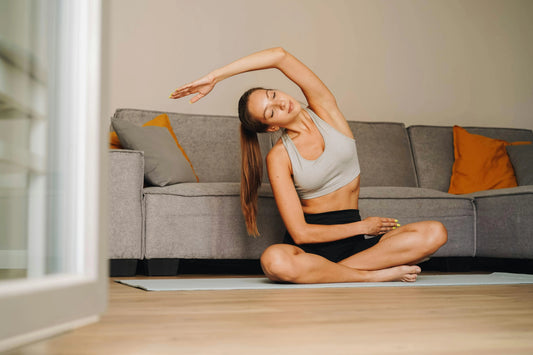
Seated lateral breathing
Position: Sit comfortably on your mat, legs crossed or extended in front of you.
Action: Place one hand on your chest and the other on your abdomen.
Inhale: Through the nose, widen your rib cage to the sides without inflating your belly.
Exhale: Through the mouth, slowly release the air while maintaining engagement of the center.
Repetition: Perform this exercise for 3 to 5 minutes to become aware of your breathing.
Breathing with arm movement
Position: Lie on your back, knees bent, feet flat on the floor.
Action: Extend your arms above your head.
Inhale: Through the nose, open the rib cage by spreading the ribs.
Exhale: Through the mouth, bring the arms back down while controlling the movement.
Repetition: Perform 5 to 10 cycles to coordinate breathing with movement.
Breathing in the quadruped position
Position: Get on all fours, wrists under the shoulders and knees under the hips.
Action: Engage the abdominals to stabilize the trunk.
Inhale: Through the nose, widen the rib cage without arching the back.
Exhale: Through the mouth, contract the abdominals while maintaining stability of the trunk.
Repetition: Practice this exercise for 3 to 5 minutes to strengthen body awareness.
Practical tips for incorporating Pilates breathing
To make the most of Pilates breathing, a few simple habits can make a difference. First of all, focus on regular practice: even a few minutes a day are enough to feel the benefits for body and mind. Also pay particular attention to concentration, staying fully aware of your breath and its synchronization with each movement. Finally, think about progression: start gently, then gradually increase the duration or intensity of your exercises, in order to develop a solid and enjoyable practice.
What are the benefits of Pilates breathing?
Breathing in Pilates is not just about taking in air, it truly transforms the practice. By engaging the deep muscles, it contributes to muscle strengthening and helps create a more toned body. It also promotes better posture, helping to properly align the spine and stabilize the body during exercises. Finally, this conscious breathing acts on the mind: by focusing on the breath, tension is released, which leads to reduced stress and a lasting sense of well-being.
Conclusion
Mastering the breathing specific to Pilates is fundamental for beginners looking to get the most out of this method. By incorporating these breathing exercises into your daily practice, you will lay the foundations for an effective practice, beneficial for body and mind.
To deepen your knowledge and improve your technique, don't hesitate to follow classes led by professionals or to consult additional resources such as articles on the subject: Pilates coaching for personalized guidance ; What sport should you pair with Pilates for optimal results? ; Prenatal Pilates and its benefits during pregnancy