How to Do Pilates at Home?

Pilates is a gentle, comprehensive method accessible to everyone. It aims to strengthen the muscles in depth, improve posture, and develop better body awareness. While studio classes are ideal for beginners, it's entirely possible to practice Pilates at home, in the comfort of your living room. You just need to know the right principles, have a bit of equipment (or none at all), and above all, listen to yourself.
Why practice Pilates at home?
Doing Pilates at home offers great freedom: you can train at your own pace, in peace, with no time constraints. It's also a special moment to refocus and release tension accumulated during the day.
The Pilates method is based on concentration, breathing, precision of movement, and control. Even a few minutes a day are enough to feel the effects: a stronger back, a more toned stomach, better flexibility, and straighter posture.
Preparing your practice space
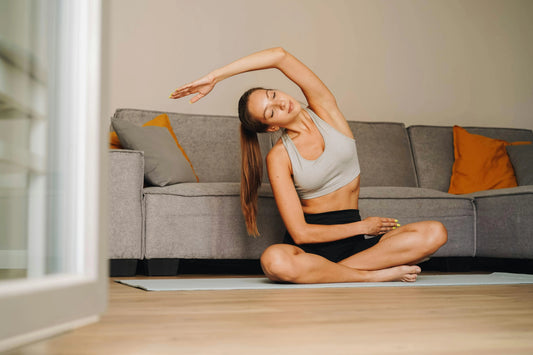
You don't need much space: a quiet, well-ventilated corner is enough. Turn off the TV, put your phone aside, and set up your mat on the floor.
If you have equipment, that's a bonus: a small ball, a Pilates circle, a resistance band, or a cushion can help vary the exercises. Otherwise, your body and your breath are your best tools.
Simply make sure to choose a mat thick enough to protect your back and joints, since many exercises are done lying down.
The basics to know before you begin
Before you get started, it's essential to understand the fundamentals of Pilates:
- Breathing: you inhale through the nose and exhale through the mouth, engaging the stomach. This activates the deep muscles, particularly the transverse abdominis.
- Engaging the center (or "powerhouse"): this refers to the abdominal area, the pelvis, and the lower back. It must stay stable throughout the exercises.
- Slowness and precision: Pilates is not a race. Every movement should be controlled, fluid, and accompanied by conscious breathing.
Examples of simple exercises to do at home
Here are a few accessible movements, perfect for a 15 to 20 minute session at home.
1. The Hundred (breathing warm-up)
Lie on your back, knees bent at 90°, arms along your body.
Lift your head and shoulders slightly, then extend your arms just above the floor.
Inhale for 5 small arm pumps, exhale for 5 more. Repeat up to 100 pumps.
➡ This exercise activates the breath, wakes up the abs, and strengthens focus.
2. The Bridge (strengthening the back and glutes)
Lie on your back, knees bent, feet hip-width apart.
Inhale, then as you exhale, slowly lift your pelvis off the floor, unrolling the spine vertebra by vertebra.
Hold for a few seconds at the top, then lower back down slowly.
➡ Excellent for toning the glutes, relieving the lower back, and improving spinal mobility.
3. The Roll Up (flexibility and core strength)
Lie down with your arms extended behind your head, legs extended.
Inhale, then exhale as you slowly roll up the upper body to touch your toes.
Keep your stomach pulled in, then roll back down just as slowly.
➡ This exercise strengthens the abdominal wall while loosening up the spine.
4. The Swimming (back and posture)
Lie on your stomach, arms extended in front of you.
Lift your right arm and left leg at the same time, then alternate.
Keep your gaze toward the floor to avoid straining your neck.
➡ Ideal for strengthening the back, improving posture, and stimulating coordination.
5. The Final Stretch
Sit down, legs extended, arms in front of you.
Inhale, then exhale as you gently lean forward without forcing.
➡ This relaxes the muscles and allows you to end the session gently.
Tips for progressing at home
- Start with 10 to 20 minutes, 2 to 3 times a week, then gradually increase.
- Film yourself or practice in front of a mirror to correct your form.
- Stay in tune with your body: Pilates should never cause pain.
- You can follow videos by certified instructors to learn proper positioning before practicing on your own.
And above all: keep in mind that consistency matters more than duration. It's better to do 15 minutes every day than a one-hour session once a month.
Can I use my MAHOLA yoga mat for Pilates at home?
Absolutely! Our yoga mats in 3, 5, and 7 mm thicknesses are perfectly suited to Pilates practice. Their non-slip surface and balanced density offer excellent comfort for floor exercises, whether gentle or more dynamic movements.
A 7 mm mat is ideal for optimal cushioning, while the 3 mm and 5 mm mats are perfect for better stability and easy transport.
Whether at home or in a studio, your MAHOLA yoga mat is the perfect versatile accessory for Pilates and many other disciplines.
In summary
Pilates at home is a simple, effective way to take care of yourself without equipment and without pressure. This practice invites you to slow down, refocus, and strengthen from within. With a bit of consistency, you'll quickly feel the benefits: a more flexible body, a stronger stomach, and a more balanced posture.
So, put on comfortable clothing, roll out your mat, breathe deeply… and let the Pilates method transform your daily life, one movement at a time.
Discover other articles on the subject:
Pilates breathing exercises for beginners
Relieving back pain with Pilates