The 12 Sun Salutation Poses Explained

Yoga mat shown in the photo: Surya 3mm Magic
The Sun Salutation, or Surya Namaskar, is one of the most iconic sequences in yoga. Fluid, energizing, and meditative all at once, it links breath and movement in a harmonious dance of body and mind.
But where does this ancestral practice come from? What are its benefits? How do you perform each pose step by step? And at what time of day should you practice it?
Here's a complete guide to understanding and practicing mindfully, on your favorite yoga mat.
To practice the sun salutation in the best conditions, we recommend choosing an organic, non-slip yoga mat that will offer you stability and comfort.
The spiritual and symbolic origin of the Sun Salutation
The Sun Salutation has its roots in the Vedic tradition of ancient India (the oldest spiritual reference in Hindu culture). Surya, the Sun god, was worshipped as the source of all life on Earth, a symbol of light, strength, warmth, and consciousness. The earliest salutations were therefore a way of expressing gratitude for this vital energy that illuminates, warms, and nurtures all that lives.
Beyond the symbolic gesture, Surya Namaskar was also a spiritual act: turning toward the Sun meant connecting to the inner light, that divine spark present in each of us. It's this energetic and sacred dimension that gives the sequence its full power.
Over time, this practice was incorporated into modern yoga as a daily ritual, a way of warming up the body before meditation or asana practice, but also as a prayer in motion. It's a way of remembering that every breath, every stretch, every intention can become an offering to life.
The deep benefits of the Sun Salutation
Practicing the Sun Salutation means activating the whole body while also rebalancing internal energy. Each movement, each breath, acts like an inner massage that revitalizes the organs, stimulates circulation, and calms the mind.
Physically, this sequence improves spinal flexibility, strengthens the deep muscles, and tones the entire body. The arms, legs, back, abs: everything works together in a natural synergy. Opening poses, like Cobra or the Lunge, build strength and mobility, while the forward folds and grounding poses cultivate relaxation and focus.
Energetically, Surya Namaskar acts as an overall rebalancing. It harmonizes the polarities, yin and yang, feminine and masculine, and revives the flow of prana, that vital energy that circulates through the subtle body. Practiced in the morning, it energizes; practiced in the evening, it unwinds and soothes.
And mentally, the Sun Salutation quiets the thoughts. By synchronizing breath and movement, you enter a meditative state where the mind gradually fades away. It's an invitation to reconnect with yourself, to return to what's essential, to that inner silence yoga seeks to reveal.
The 12 poses of the Sun Salutation explained step by step
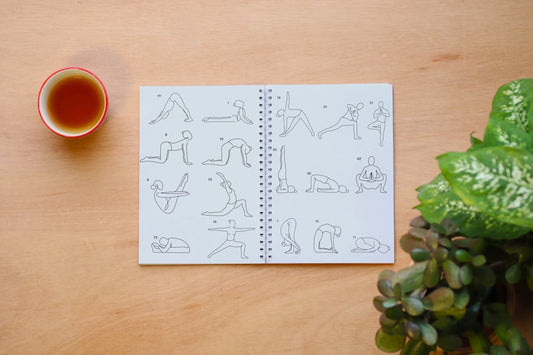
The traditional sequence includes 12 poses that flow together smoothly, in rhythm with the breath. It's important not to perform them "mechanically," but to feel each transition, each breath.
Settle onto a cotton yoga mat, stable and soft, that will offer you both grip and comfort. Take the time to root your feet, release your shoulders, and begin slowly.
Pranamasana – Prayer pose
Standing, palms joined at the heart, close your eyes and connect to your breath. This opening pose symbolizes respect and intention: giving thanks to the Sun, to life, and to the present moment.
Hasta Uttanasana – Arms raised to the sky
Inhale, raise your arms, lengthen the spine, and gently open the chest. The gaze follows the hands. Imagine stretching toward the light, welcoming the Sun's energy.
Uttanasana – Standing forward fold
Exhale and fold forward. Let gravity do its work. If the legs are straight, that's perfect; otherwise, bend the knees slightly to protect the back. Fully release the neck.

Ashwa Sanchalanasana – Low lunge
Inhale, step the right leg back, keeping the left knee bent. The heart opens, the gaze is turned forward. Feel the strength of the earth beneath your hands, the lightness of the breath lifting you.
Phalakasana – Plank pose
Exhale, step the left leg back into plank. The body is aligned, the abs engaged, the neck long. This is a pose of strength and stability.
Ashtanga Namaskara – Eight-limbed pose
Inhale, then lower gently: chin, chest, knees, and toes touch the floor. The hips stay slightly raised. You symbolically salute the Earth, as a sign of humility.

Bhujangasana – Cobra
Slide forward and inhale. Lift the chest, open the shoulders, look toward the sky. This pose awakens the heart and moves energy through the whole chest.

Adho Mukha Svanasana – Downward-facing dog
Exhale and press into your hands to lift the hips. The heels reach toward the floor, the back lengthens, the breath deepens. Stay here for a few breaths, letting the body settle.

Discover all the benefits of yoga inversions.
Ashwa Sanchalanasana – Low lunge (other leg)
Inhale and bring the right foot forward, left knee on the floor. Open the chest, breathe in stability and confidence.
💡 Tip: The quality of your natural yoga mat plays a crucial role in the fluidity of your transitions between poses.
Padahastasana – Return to the forward fold
Exhale, bring the left foot next to the right. Relax the head and shoulders. Feel the warmth circulating through the body.
Hasta Uttanasana – Stretch toward the sky
Inhale, raise the arms above the head, stretch upward. The heart opens, the face radiates.
Pranamasana – Return to prayer
Exhale, bring the hands back to the heart. Stay still for a few moments, in gratitude and silence.
When to practice and how many salutations to do?
Traditionally, the Sun Salutation is practiced in the morning, facing the rising day, the moment when the body awakens and solar energy begins to radiate. It's the ideal time to energize your system, clarify the mind, and awaken vitality. But there's no strict rule: some prefer to practice it at the end of the day, to release accumulated tension and find inner calm.
If you're a beginner, do 3 to 5 complete cycles, taking the time to breathe well between each pose. Over time, you can increase to 6, 9, or 12 salutations, depending on your level and your energy that day. What matters isn't the quantity, but the quality of your presence. Three slow, mindful salutations are better than ten done on autopilot.
The different versions of the Sun Salutation
There are several variations depending on the schools and styles of yoga:
- Surya Namaskar A and B (in Ashtanga Yoga): dynamic versions with more rhythmic transitions.
- Hatha Yoga Sun Salutation: slower, gentler, and accessible to beginners.
- Moon Salutation (Chandra Namaskar): a more introspective version, ideal in the evening to calm the mind.
Some modern forms of yoga also adapt the sequence to different needs (mobility, breath, grounding…). Each version carries the same intention: honoring the light, both that of the sun and the one that shines within each of us.
A video for practicing the sun salutation:
In conclusion
The Sun Salutation is much more than a simple warm-up: it's a celebration of life, a dance of breath and movement, a way of honoring each moment. Practiced regularly, it strengthens the body, calms the mind, and opens the heart.
Whether you're a beginner or an experienced yogi, what matters most is practicing mindfully, on a natural yoga mat, sturdy, soft, and durable, a sacred space where your practice comes to life.
Breathe, stretch, smile at the Sun… and let the light move through you. 🌞
Ready to practice the sun salutation?
Discover our selection of eco-friendly, handmade yoga mats and start your practice in the best conditions.
What if you practiced a yoga aligned with your values?
Choosing a yoga mat isn't a small decision: it's the link between you and the Earth, the support of your practice, a reflection of your values.
What if you turned your mat into a conscious, ethical, and natural space?
Discover MAHOLA mats, handmade, in GOTS-certified organic cotton and plastic-free. Vegan yoga mats that respect your body and the planet, designed to support your practice with gentleness, stability, and beauty.